Thursday, 21 January 2016

Future Festival: Experience Next Year Before It Happens


I was intrigued by their catchy copywriting. It was written as the thumbnail of this video on a conference called Future Festival. A 3 minute watch, might be worth a look.


Apart from that, their website is also interesting. They crowdsource their intelligence, "Trend Hunter has developed an unrivaled methodology for unlocking crowdsourced insight. Unlike trend reports created by individuals and small teams, we crowd source thousands of ideas from the Trend Hunter community, then, we crowd filter using our audience, a virtual focus group that has included more than 100,000,000 people. Think of it as 'Moneyball for Consumer Insight.' " 

A well 33 minute-long speech by their Founder on Youtube, has been watched by almost 5 million users. So, I guess there's something about them. If you haven't known about this already.

Hi, How's Your Brain Doing Today?

Because for God's sake, we can use a healthy dose of wit in our life!

First of all, read The Guardian's eloquent article on what power tabletop games have. Learning how you and others can (insert best and worst adverb here) behave in simulative (is this a legit word) situation, getting a major hit in your brain when the game's scenario makes you realize you've turned into this mass-murderer, and a refreshing way to gain high amount of information...are just some of what games give you.

1. Reverse Role Play

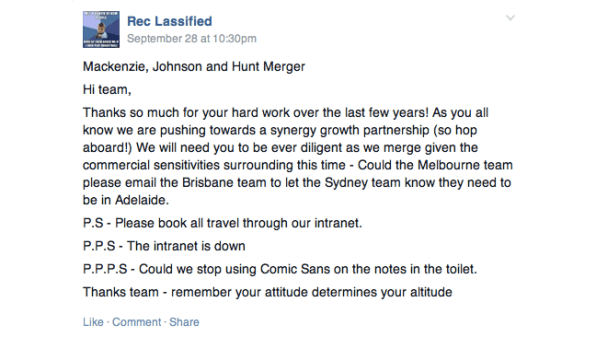
If you could be your Boss for a day, how would you (write email, structure work, plan work hours/bonus/trainings etc, treat others) and how would you expect the person holding your actual position be? Check this website for example, and expect chaos powdered in sarcasm to flood in.


2. What if, there is a company that offer companies to "gamify part of workload" to keep innovative and highly creative output from their employees. Something along the line of this.

3. Boring Games. It says "How to make work fun by these games", and...you guessed it, fun NOT!

4. A game that combines history, politics, and mind-twisting strategies: Twilight Struggle 

“Twilight Struggle makes you feel like you’re constantly under attack on all fronts, that every decision you make is important or even globally consequential, and that you have to pick between the best of bad or even catastrophic options... and that’s when you’re winning. Come to think of it, it probably feels a bit like being a superpower engaged in a tense standoff with a similarly powerful but ideologically opposing hegemon.”


5. Euphoria: Build a Better Dystopia 

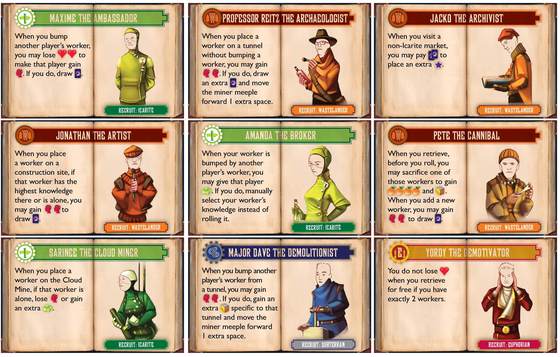
"Euphoria is a worker-placement game for 2-6 players. Which dice are your workers? The number on each dice represents that worker's knowledge, which you will compare to the knowledge of other players' workers throughout the game. The more you send your workers throughout the city and the more workers you add, the more they discover about their twisted society. If they learn too much, they might desert your cause.
You also have a few elite recruits at your disposal: one who has pledged allegiance to you and the other who has yet to be convinced. You can inspire and use that reticent recruit by reaching certain milestones in the game or by letting other players unwittingly reach those milestones for you. Your path to victory is paved with the sweat of your workers, the strength of your allegiances and the tunnels you dig to infiltrate other areas of the world, but the destination is a land grab in the form of area control.
You accomplish this by constructing markets that impose harsh restrictions of personal freedoms upon other players, changing the face of the game and opening new paths to victor. You can also focus on gathering artifacts from the old world, objects of leisure that are extremely rare in this utilitarian society.

What are you willing to sacrifice to build a better dystopia?


 And the designers of this game also crowdsource ideas for updates on the game.

They archive all their updates, plans, and funding proposals on Kickstarter.

6. Careers
Someone somewhere mentioned this was a good game, but it sounds lame to me.

"Careers is a game where the players set their own victory conditions. A player may choose to pursue Fame, Happiness, Money, or a combination of all three. The limitation being that the total number of "points" earned in the 3 categories must total 60. eg. 60 Happiness, 0 Fame, 0 Money; 20 of each; or any other combination. The players endeavor to fulfill their goal by going through any number of different "occupation paths". All paths have some prerequisite for entry, and benefits accrue from going through any of the paths more than once. The different occupations are designed to be suited to different strategies, eg. Hollywood is good for fame points, while "Going to Sea" is good for happiness. In the end it is the player (or team of players) who gets to their pre-set goal first who will be the winner, and achieve everything they ever wanted in life."


7. In an interesting reference from Careers, here is an excellent sample of how a little creativity can go a long way. Surviving the World, is apparently a popular photo webcomic where you can enroll to get educated on their lessons.


more coming...

Indonesia - Green Bonds

1. JakartaGlobe article
  • there can be Greenbonds in Palm Oil Plantation, that is, making a sustainable PO plantation
  • there is a thing called Islamic Greenbonds, which is termed "sukuk"
  • currently there is appr. $70 billion greenbonds on the market, which is just a drop in the bucket compared to hundreds of trillions of other forms of capital, but it has shown exponential growth over the past few years.
2. World Bank article on what Green Bonds is

3.  Greenbonds Indonesia on Facebook

4. Insight to GreenBonds

5. A useful Q&A on Greenbonds
for example, "How do Investors know what's 'green'?"

A select list of literature on Millennial Marketing

On what makes marketing to Gen-Y different:


  1. Gen-Y wants to buy with a purpose
Important points: 
  • No. 1 attitude unifying the generation was: “I would fight for a cause I believe in.” 
  • Simply put, Gen-Yers have an activist bent. But their activism is different from the idealism and rebellion of their Boomer parents in the 1960s and ’70s. For today’s Gen-Yers, activism is not about rebelling against institutions — there’s simply not that much left to rebel against.
    Belief in institutions like government and big business crumbled long ago. Rather, in a world of almost infinite lifestyle choices, Gen-Y activism is about young people knowing their own inner priorities and making a vow to live by them — even in the face of adversity.
    A big part of Gen-Y activism is what I call “self-activism.” They treat themselves and their dreams almost like causes. It’s less based on idealism and more a matter of necessity: If they don’t activate the revolutionary inside, they simply won’t get anywhere in today’s hyper-challenging marketplace.
    According to the Wall Street Journal, half of all new college graduates now believe that self-employment is more secure than a full-time job. According to a Gallup pool, over two-thirds of high school students say they intend to start their own companies.
     
     
  •  Among GenYers’ most important personal values are authenticity, altruism and community.
    Yet, it is this generation’s consumer activism that makes them a unique challenge for marketers. Gen Y-ers don’t just want to buy brands, they want buy in to what a brand believes in. They flock to brands like Red and Livestrong that spark movements.
  •   Obama became the choice of Gen-Y voters because he asked them to join a movement for change, not simply to vote for him.
2. Ten Things You Should Know in Hiring Millennials:
  • Nurturing corporate culture
  • Job flexibility
  • Challenging work
  • Professional and personal growth opportunities
  • Volunteering options
  • Competitive salaries
  • Advancement opportunities
  • Recognition programs
  • Business casual
  • Intrapreneurship programs     
3. But The Economist wants you to think it's just a myth
Because Gen-Y still somewhat want a secure career, and Gen X also wanted challenging work. Nothing new they say.

4. Millennials is two-part: Gen Y and Gen Z.
This 13 pages-long report explains how Gen-Z will invite the greatest shift in the workforce in the next 7 years. They are more competitive, highly wired (or wirelessly connected), somewhat delusional in their expectations of work (should be meaningful, challenging, fun, and high paying), and might be less loyal.

"Already the bleeding edge of Generation Z (today’s 16 to 23 year olds) are already more than 11 million strong (nearly 7%) in the North American workforce and their numbers will grow dramatically over the next few years. By 2015, they will be 20 million; 25 million by 2017; 30 million by 2019. This is the new emerging workforce and they will fill up a new “youth bubble” in the workplace in the next seven years, just as roughly 30 million aging Baby Boomers will retire. Generation Z will present profound challenges to leaders, managers, supervisors, hr leaders, and educators in every sector of the workforce"

to be continued...